Table of Contents
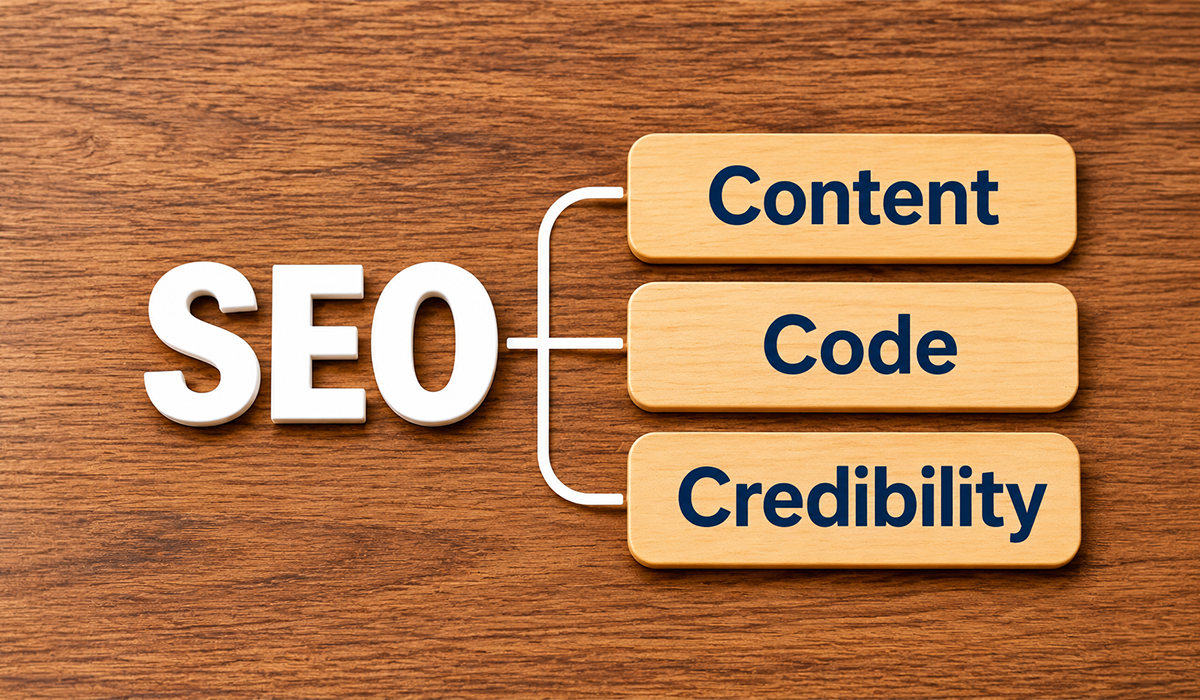
Search engine optimization company Dubai strategies rely on three essential elements: Content, Code and Credibility. These components influence how a website communicates with visitors, how search engines interpret its pages and how a business establishes trust online. Together, they provide a practical foundation for improving organic visibility and attracting relevant audiences.
A website may offer valuable services, but reaching potential customers requires more than publishing information. Its pages must address what visitors are searching for, its technical structure must support search engine access, and its online presence must demonstrate reliability. Understanding how these three elements work together helps businesses make informed decisions about website development and long-term organic growth.
How a Search Engine Optimization Company Applies the 3 C’s
The three C’s address different aspects of website performance. Content focuses on the information presented to visitors, Code covers the technical foundation, and Credibility concerns the reputation a business develops online. Each has a distinct purpose, but all three contribute to a well-developed organic search strategy.
1. Content: Creating Information That Serves a Purpose
Content is the first C because it communicates a business’s services, expertise and value to potential customers. Visitors should be able to understand what a company offers, how its solutions work and whether they meet their requirements.
Effective SEO content writing begins with understanding the audience rather than simply inserting popular search terms into website pages. Someone researching a professional service may need an explanation of available solutions, while another visitor comparing providers may look for experience, service features or practical considerations.
Businesses can address these information needs through different content formats:
- Informational articles: Explain industry subjects and answer questions that readers commonly ask.
- Service pages: Describe specific offerings, their applications and the requirements they address.
- Comparison guides: Help visitors understand differences between products, solutions or service approaches.
- Case studies: Present project experiences and demonstrate how particular business challenges were addressed.
Each page should contribute something useful to the website. Repeating the same information across several articles can make navigation less effective and reduce the value of publishing additional content.
Understanding What Visitors Want to Find
Search intent refers to the purpose behind a person’s search query. Recognising this purpose helps businesses select suitable topics, determine the right content format and provide information that matches visitor expectations.
For instance, someone searching for ways to improve website indexing is likely looking for educational guidance. In contrast, a visitor researching professional optimisation support may want to compare service providers or understand what a campaign involves.
Before publishing, businesses should consider whether a page:
- Addresses a specific audience requirement or question.
- Provides accurate and relevant information.
- Offers sufficient detail to help readers understand the subject.
- Gives visitors a clear next step when further information is needed.
This approach makes content planning more organised and helps prevent unnecessary overlap between website pages.
2. Code: Developing a Reliable Technical Foundation
Code is the second C and concerns the technical elements that allow a website to function properly and remain accessible to search engines. It includes page structure, navigation, mobile responsiveness and loading performance.
Even valuable information can be difficult to discover when technical problems interfere with crawling or indexing. Technical SEO services help identify these issues and improve the underlying website structure.
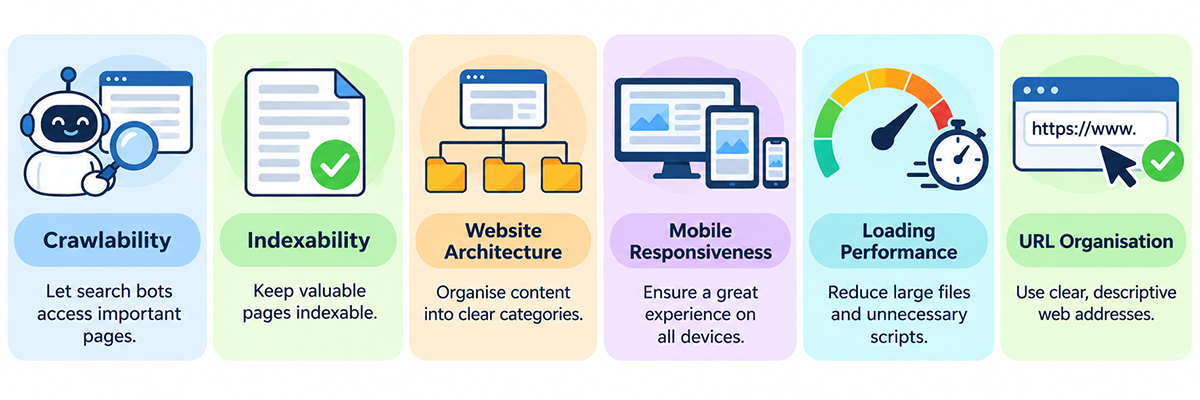
A technical assessment commonly covers:
- Crawlability: Checking whether search engine bots can access important website pages.
- Indexability: Identifying valuable pages affected by indexing restrictions.
- Website architecture: Organising website sections into logical categories.
- Mobile responsiveness: Ensuring layouts and interactive features work across different devices.
- Loading performance: Identifying oversized images, unnecessary scripts and other elements that affect page speed.
- URL organisation: Using clear web addresses that reflect the website’s content structure.
These elements contribute to a more dependable website and help search engines process its information effectively.
Maintaining Clear Navigation and Internal Links
Navigation influences how visitors interact with a website. Menus should make important sections easy to locate, while related pages should be connected through meaningful internal links. An experienced SEO company in Dubai can help businesses organise these connections to make important website information easier to access.
For example, an article explaining a particular business service can direct readers to the corresponding service page. This provides a natural next step for visitors who want more detailed information.
Businesses should also review broken links, unnecessary redirects and pages that are difficult to reach. Correcting these issues helps maintain a consistent browsing experience and prevents visitors from encountering unnecessary interruptions.
Technical changes should be prioritised according to their actual impact. Resolving an indexing problem or correcting a broken navigation path is generally more valuable than adjusting minor elements that already function correctly.
3. Credibility: Building a Reliable Online Reputation
Credibility is the third C and focuses on how a business demonstrates its experience and reliability. Before making an inquiry, visitors may look for customer feedback, examples of previous work and information that supports a company’s claims.
A trustworthy online presence develops through genuine business activity. Accurate company information, useful industry contributions and authentic customer experiences provide stronger evidence of reliability than unsupported promotional statements.
Businesses can strengthen their online reputation through several activities:
- Publishing original industry insights and useful resources.
- Sharing genuine customer reviews and relevant project examples.
- Maintaining accurate company details across appropriate business directories.
- Earning mentions from reputable industry publications.
- Keeping business information consistent across relevant digital platforms.
These efforts help establish a recognisable business presence and give potential customers more information when evaluating a company.
Why Relevant Backlinks Matter
Backlinks are links from external websites that direct visitors to another website. They can help search engines discover pages and provide additional context about a business’s presence across the internet.
However, acquiring a large number of links should not be the primary objective. Their relevance, quality and context matter more than quantity alone.
An effective approach to link building for SEO focuses on earning references through useful resources, industry contributions and relevant professional relationships. For example, an industry publication may reference a company’s research or expertise and include a link for readers who want to explore the subject further.
Businesses should avoid manipulative link schemes and unrelated link exchanges. Building genuine industry connections and providing valuable information offers a more sustainable way to develop online authority.

Why All Three C’s Matter for Better SEO Performance
Content, Code and Credibility influence different parts of a website’s performance, but their contribution becomes more meaningful when considered together. Good information needs an accessible platform, while technical improvements are more valuable when the website provides something relevant to its audience.
A coordinated SEO strategy brings these activities together and ensures that website improvements support the same business objectives.
How the Three Components Work Together
Consider a business launching a new professional service. Its website needs to explain the offering, make the information easy to find and establish confidence among potential customers.
The three components contribute in different ways:
- Content establishes relevance: The service page explains what the business offers, who the service is intended for and which requirements it addresses.
- Code supports accessibility: A clear page structure, appropriate internal links and correct indexing settings help search engines discover the information.
- Credibility supports trust: Genuine customer experiences, relevant industry references and evidence of expertise help visitors evaluate the business.
Together, these improvements create a stronger foundation for attracting relevant traffic and generating enquiries because they address different aspects of website performance.
Search Engine Optimization Company Dubai: Identifying the Right Areas for Improvement
Not every business requires the same level of attention across all three components. A newly launched website may need a more organised content structure, while an established business might benefit from technical corrections or additional evidence of industry experience.
A professional SEO consultation can help identify these requirements before an optimisation campaign begins. The assessment should consider the website’s current condition, business objectives, target audience and the improvements needed to address existing limitations.
The business should prioritize recommendations based on its actual needs rather than following a prescribed set of activities. Clear explanations and realistic performance expectations help businesses understand the reasons behind each recommendation.
Evaluating SEO Progress Through Meaningful Measurements
Website performance monitoring helps businesses evaluate whether their optimisation efforts are producing meaningful results. However, keyword rankings alone cannot explain how effectively a website is attracting and engaging its intended audience.
Different measurements can provide insight into the three components:
SEO component | Areas to monitor |
Content | Organic impressions, relevant traffic, engagement and enquiries |
Code | Indexing status, crawl errors, mobile usability and loading performance |
Credibility | Relevant referring domains, quality of external mentions and brand recognition |
These indicators should be evaluated alongside business objectives. An increase in website traffic, for example, is more meaningful when visitors are interested in the services offered and take relevant actions.
Regular reviews also help businesses recognise changes in audience behaviour, identify technical problems and determine whether existing webpages need improvement.
The scope of SEO services should reflect these priorities, with activities selected according to the website’s condition and business requirements.
Conclusion
Content, Code and Credibility form the basis of an effective organic search marketing strategy. Good content helps businesses reach their target audiences, while a technically sound website makes that content accessible to visitors and search engines. For businesses seeking better organic visibility, a search engine optimization company Dubai can help bring these elements together through a strategy that reflects their website’s condition and commercial objectives.
When comparing an SEO agency, businesses should look beyond general promises and consider the relevance of its recommendations, the clarity of its approach and how it measures progress. Giving all three C’s consistent attention creates better opportunities to reach relevant audiences and build a sustainable online presence.
Circle Out helps businesses strengthen their online presence through professional search optimization solutions, website improvements and strategies designed to support sustainable organic growth.
Frequently Asked Questions
How do the 3 C's improve website performance?
The three C’s work together to improve website content, technical accessibility, trust and overall organic search performance.
Can a website perform well with strong content but weak technical foundations?
Strong content needs a technically sound structure so search engines can access and understand important pages.
Why should new businesses focus on online credibility?
New businesses can build credibility through accurate information, genuine customer feedback and relevant industry references.