Table of Contents
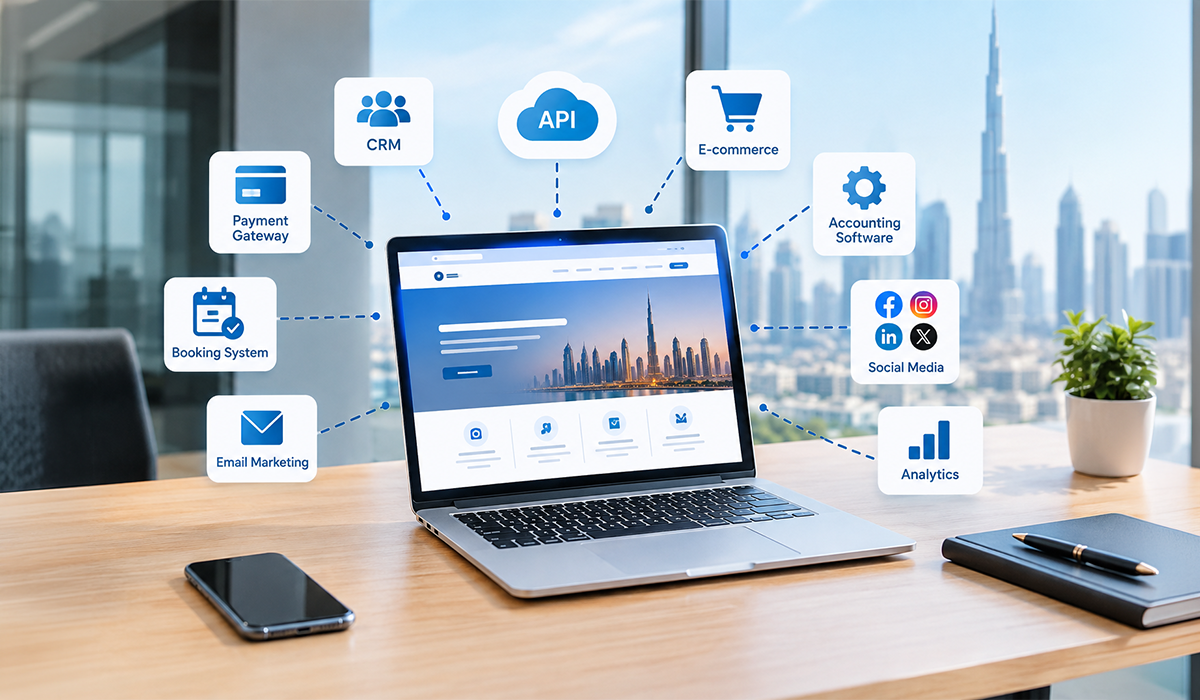
Web development services Dubai can help businesses connect their websites with the digital tools used for sales, customer management, bookings, payments and internal operations. Instead of keeping these systems separate, businesses can create controlled connections that allow relevant information to move between platforms. This can reduce manual data entry and give teams a more consistent view of customer and transaction information.
A connected website is not simply about adding more features. The technical setup needs to consider how platforms communicate, where information is stored, which events trigger actions and how access is controlled. A practical integration therefore starts with the business process before the appropriate technical method is selected.
Web Development Services: Which Business Tools Can Websites Connect With?
Businesses use different applications to manage their daily activities, and each may serve a specific operational purpose. A website development company Dubai can assess these systems and identify where website information needs to be exchanged with another platform.
Which platforms are commonly integrated?
- CRM platforms: Transfer enquiries, customer details and lead information.
- Payment gateways: Process transactions and return payment status.
- Booking platforms: Exchange appointment details, availability and confirmations.
- Accounting systems: Pass relevant transaction information into financial processes.
- Inventory software: Update stock information and order-related records.
- Customer-support tools: Send enquiries or customer activity to support teams.
The key consideration is not simply whether two platforms can communicate. Developers also need to establish which system owns particular information and when another platform should receive an update.
How Do APIs Allow Different Platforms to Communicate?
API stands for Application Programming Interface. An API provides a defined method for one application to request or send information to another. Website development services can use APIs to connect a website with external applications while following the technical rules established by each platform. These rules normally cover endpoints, data formats, authentication and permitted actions.
What happens during an API exchange?
A typical API interaction may involve several stages:
- The website sends an authorised request.
- The external platform validates the request.
- The platform returns information or confirms an action.
- The website processes the response.
- The relevant information is displayed, stored or passed to another process.
The exact sequence depends on the purpose of the connection. A booking platform may need to check availability before accepting an appointment, while a payment gateway may need to confirm a successful transaction before an order moves forward.
Web development projects can also use different API methods depending on whether information needs to be requested, submitted or updated. Choosing the correct method helps keep the connection aligned with the capabilities of the external platform.
When Is a Custom Integration More Suitable?
Custom web development can be useful when a standard plugin or connector cannot accommodate the way a business operates. A tailored connection can define specific rules for transferring information between platforms without forcing the business to change an established workflow.
What can a tailored integration handle?
A custom connection may be designed to:
- Send enquiries to different teams according to selected criteria.
- Create an internal task after a defined website action.
- Transfer selected order details to a fulfilment platform.
- Match customer records using unique identifiers.
- Convert information into the format required by another application.
This approach is particularly useful when several systems are involved in one business process. The connection can be built around the actual sequence of actions rather than relying on a generic integration.
How Can Webhooks Support Event-Based Connections?
Webhooks allow one platform to notify another when a particular event takes place. Unlike repeated requests that check whether something has changed, a webhook sends information when the defined event occurs. This makes it suitable for processes where another system needs to respond promptly.
Which events can trigger a webhook?
Common examples include:
- A payment being completed
- A booking being confirmed
- A customer account being created
- An order status changing
- A subscription being updated
Business website development can be configured to use these events to initiate actions in other applications. For example, a completed payment could trigger an order update, while a confirmed booking could create a corresponding record for an internal team.
How Should Integration Security Be Planned?
Web development services Dubai should address security before external systems begin exchanging information. An integration may handle customer records, transaction information or internal business data, so access should be limited to the information and functions genuinely required.
Which technical controls should be considered?
A secure integration can include:
- Appropriate authentication methods
- Restricted API permissions
- Encrypted data transmission
- Protected storage of credentials
- Input validation
- Activity monitoring
Web development should work alongside these backend controls rather than treating security as a separate feature. Whether a customer accesses the service from a desktop, tablet or phone, the same authentication and permission rules should apply.
What Should Businesses Document Before Starting an Integration?
Integration planning becomes easier when the required data flow is documented before development begins. Mobile-friendly websites may receive enquiries, bookings or payments from customers using different devices, but those actions still need to reach the appropriate internal system accurately.
What should an integration plan contain?
A practical technical brief can identify:
- The platforms involved in the process
- The information that needs to be exchanged
- The event that starts each connection
- Required authentication and permissions
- The expected response from each system
- Procedures for failed or delayed requests
- The people responsible for monitoring the connection
This documentation gives developers a clear technical reference and helps business teams understand what the integration is expected to achieve.
Web Development Services Dubai: What Should Businesses Ask Before Choosing a Development Partner?
Businesses researching best web design agencies should look beyond the appearance of previous websites when their project depends on several external systems. The provider should be able to explain how APIs, third-party platforms, authentication and data flows will work together.
Which questions can help during the selection process?
Businesses can ask:
- Has the provider worked with the required platforms before?
- Can they explain the proposed data flow clearly?
- How will failed requests be identified and handled?
- Where will integration credentials be stored?
- How will changes to external APIs be monitored?
- What testing will take place before launch?
- How will the integration be maintained after implementation?
Clear answers can help establish whether the proposed technical approach matches the company’s operational requirements. Good documentation can also make future updates easier if a connected platform changes its technical requirements.
How Can Connected Systems Improve Existing Business Processes?
Web development can connect a website with business applications without requiring every system to be replaced. The objective should be to identify useful points of communication and remove unnecessary manual steps from existing processes.
Where should businesses begin?
A review of current operations can reveal suitable opportunities for integration:
- Identify information that staff enter into more than one system.
- Find processes that depend on manual copying.
- Note delays caused by waiting for information to move between platforms.
- Identify applications that already provide integration capabilities.
- Prioritise connections according to operational importance.
The focus should remain on practical business requirements rather than the number of integrations implemented. A smaller number of well-planned connections can be easier to manage and more useful than several unnecessary ones.
Conclusion
Web development services Dubai can turn a website into a connected part of a company’s wider digital infrastructure. APIs, webhooks, custom data rules and appropriate security controls can allow information to move between websites and external applications in a structured manner. The most suitable approach depends on the platforms involved, the information being exchanged and the business process that needs to be supported.
For businesses planning connected websites and tailored digital integrations, Circle Out provides web development solutions aligned with specific technical and operational requirements.
Frequently Asked Questions (FAQs):
Can web development services connect a website with several business platforms?
Yes. A website can communicate with multiple external systems when each connection is properly configured. The development process should define the information exchanged, access permissions and actions associated with each platform.
Can an API connect an existing website with another application?
In many cases, yes. The available API, website architecture and technical requirements of the external application will determine the appropriate integration method. Developers normally review these factors before deciding how the connection should be implemented.
Do third-party integrations require ongoing maintenance?
They can require maintenance when connected platforms change their APIs, authentication methods or technical requirements. Monitoring and periodic technical reviews can help identify changes before they interrupt an important business process.